






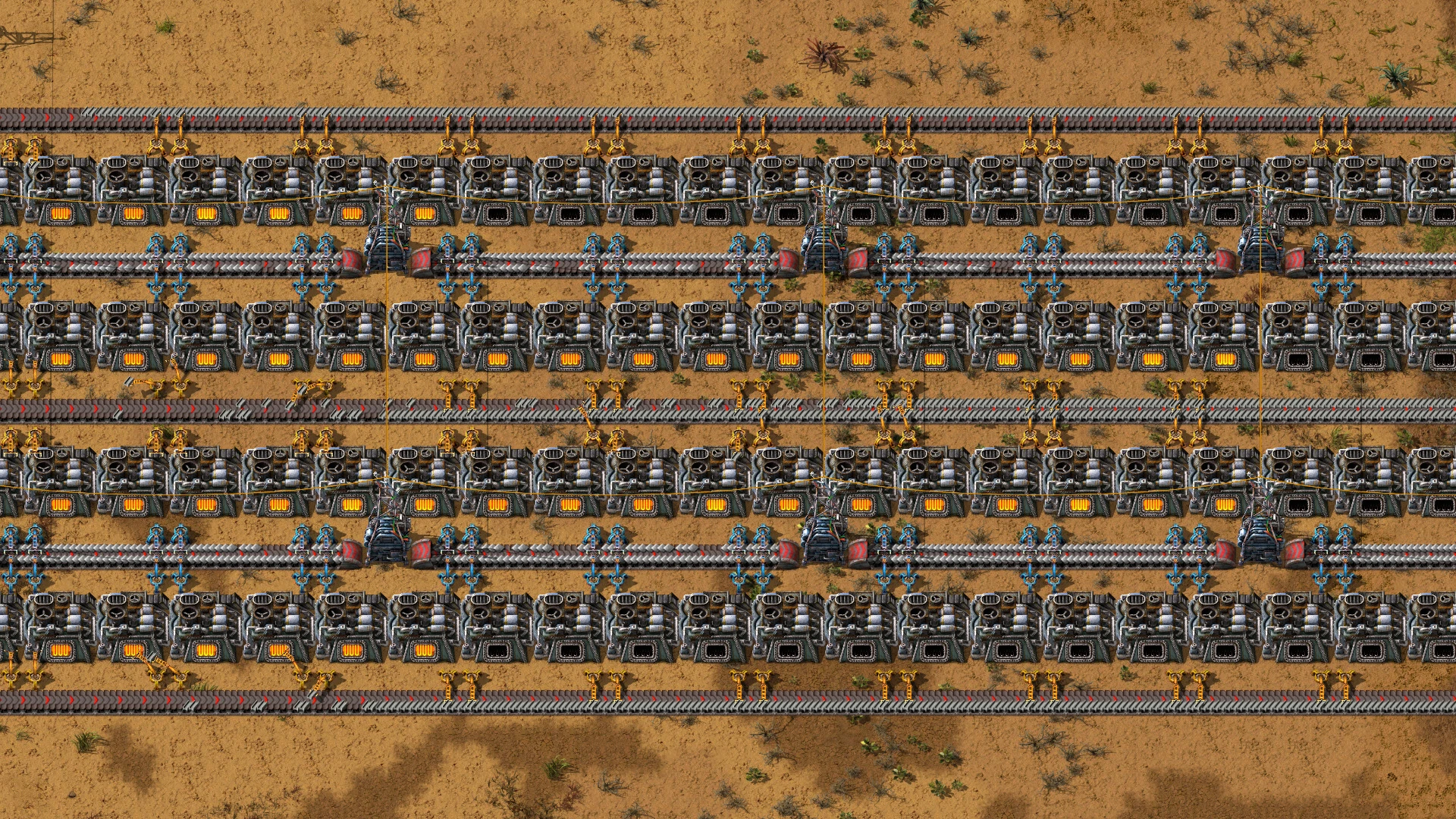
Before adding steel-smelting furnaces, check whether iron plates are missing, the existing furnaces have stopped, or production cannot keep up with demand. Work through input, fuel or power, and output before expanding the line.
First, find where the shortage happens
Follow the iron plates backward from your steel furnaces and watch the belt and the inserter feeding them. If plates arrive in fits and starts, the problem is upstream: somewhere between your iron furnaces and the steel line, other consumers — gear assemblers, belt production, science — are pulling plates off the belt first.
Success looks like being able to point at the exact segment where plates thin out. If plates disappear at shared consumers, reserve a dedicated supply for steel. If the belt is already short before that split, check upstream iron production first. Test a dedicated supply on a small stretch of furnaces rather than rebuilding the factory. If plates arrive steadily but the furnaces still stall, read on.
Try the split on a short section
For example, suppose gear production takes plates before they reach steel smelting. Put a splitter before that shared take-off: keep one output going toward gears and run the other along a short belt to just two steel-smelting furnaces. Start with the default even split. Watch whether plates enter those furnaces continuously and steel can leave. If the splitter's input is already sparse, splitting only reallocates a shortage: check iron production upstream. If the new branch works but the old one starves, total supply is still short; two working furnaces do not prove the whole factory has enough iron.
Five iron plates, not five iron furnaces
One steel plate costs five iron plates and sixteen seconds of smelting at base speed; iron ore smelts into a plate in 3.2 seconds. It is tempting to conclude you need five iron furnaces per steel furnace. You do not.
For normal-quality stone furnaces without bonuses, sixteen seconds makes either one steel or the five iron plates it needs. The one-to-one furnace count also holds at matching speeds and quality without modules, beacons, or extra productivity; faster furnaces shorten both cycles. The working ratio is one furnace smelting iron plates for each equally fast furnace smelting steel, not five. This describes what the furnaces produce, not which furnace type to build.
One caveat: that ratio counts only plates dedicated to steel. If your plate line feeds other consumers, subtract their usage before sizing anything.
Before adding furnaces, get input and output flowing
If plates reach the furnaces but the furnaces still sit idle, first check that the input inserter actually puts them inside. Then check fuel or power and the output.
Fuel or power: stone and steel furnaces burn fuel, so confirm they are stocked. Electric furnaces run on the grid instead, so check power supply there. Low power also slows inserters even when it does not stop them.
Output: inserters stop moving when the destination is full or its slots will not accept what they hold. Steel backing up on the output belt stalls the furnace no matter how much iron you deliver.
Only when the furnaces are continuously supplied, fueled or powered, and clear on the output side does furnace count become the question. If steel still falls short with furnaces running flat out, add capacity — one segment at a time, watching that iron input stays continuous and downstream machines stop starving.
Once the line flows, shorten the wait
When the line is fed and clear, what remains is the smelting cycle itself. If the existing furnaces run continuously and still cannot keep up, processing capacity is the remaining bottleneck.
To spend less time waiting for supplied furnaces to finish, you can choose Set Production Speed Multiplier on the ModOpen Factorio page. It fits a line whose inputs and outputs already work, leaving you more time to build the next section. After speeding production up, check that iron, fuel and transport can still keep pace.
References
-
Steel plate — recipe and material ratio
-
Iron plate — smelting time
-
Steel furnace — speed comparison and output rates
-
Stone furnace — fuel and smelting properties
-
Inserters — feeding and stall mechanics
Scope: conventional smelting in the Factorio 2.0 base game, at normal quality without modules, beacons, extra productivity or recipe-changing mods. The ratio covers iron dedicated to steel, not a full-belt blueprint.
Frequently asked questions
Does one steel costing five iron plates mean I need five iron furnaces per steel furnace?
No. For normal-quality stone furnaces without bonuses, one steel takes sixteen seconds and the five iron plates it needs are made in the same time. Equal-speed, equal-quality furnaces without modules, beacons or extra productivity therefore use a one-to-one count, counting only iron plates dedicated to steel.
Why am I still short of steel after switching to steel furnaces?
Steel furnaces smelt twice as fast as stone furnaces, so they pull iron plates twice as fast too. If your plate supply was already tight, the upgrade just moves the shortage upstream. Check what is actually arriving at the furnace input before adding more furnaces.
Will raising production speed fix an iron shortage?
If your check shows that plates never enter the furnace, fix delivery first. This guide suggests the production-speed option for a line with working inputs and outputs where processing time is the remaining concern. Check the feature description for your game version before using it; the name alone does not establish which material costs or other mechanics it changes.